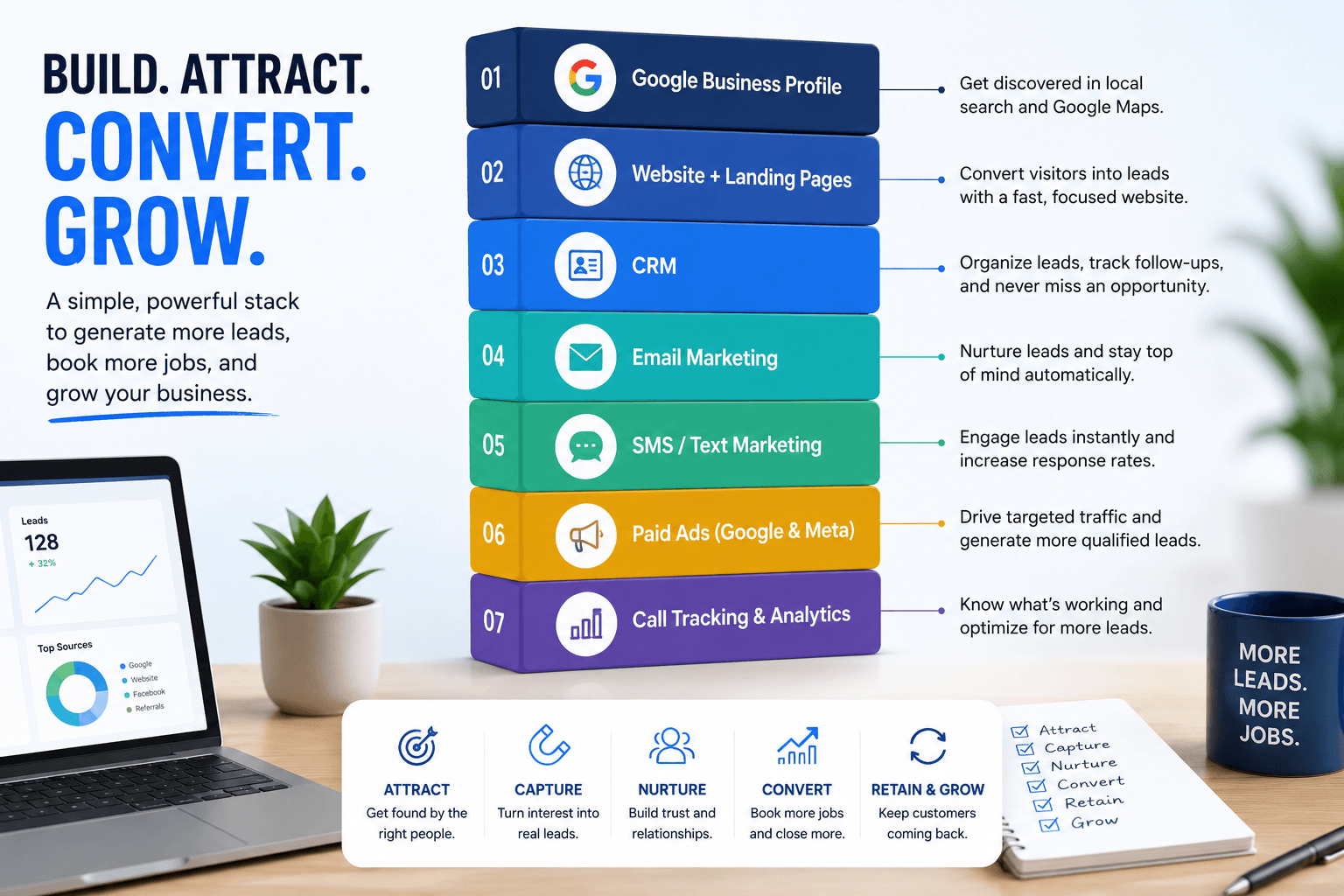
Small businesses do not need a bloated marketing stack. They need a clear system that captures demand, follows up quickly, tracks attribution, and shows what is profitable.
This is the practical stack we start with because it covers the full path from searcher to booked appointment without adding unnecessary complexity.
Key Takeaways
- The right stack connects traffic, forms, calls, CRM, automation, reviews, and reporting.
- Speed and attribution matter more than having every possible tool.
- Every tool should either create leads, convert leads, or clarify what is working.
1. A Fast Website With Conversion Paths
Your website is the hub. It needs fast load times, clear service pages, click-to-call buttons, short forms, and trust signals near every conversion point.
Most lead leaks start here: weak calls to action, hidden phone numbers, slow pages, or contact forms that ask for too much too soon.
2. Call Tracking and Form Attribution
You cannot improve what you cannot trace. Call tracking and form attribution tell you which channels create real conversations, not just traffic.
Use unique numbers carefully, preserve NAP consistency, and push every lead source into the CRM automatically.
3. A CRM Built Around Pipeline Stages
A CRM should make the next action obvious. New lead, contacted, estimate booked, estimate sent, won, lost: those stages tell the truth about revenue.
Avoid overbuilding. A simple pipeline that the team actually uses beats a complex setup that becomes shelfware.
4. SMS and Email Follow-Up
Most local buyers contact more than one business. Automated follow-up keeps you in the conversation without forcing your team to manually chase every inquiry.
The first response should happen within minutes. The next few touches should answer objections, invite booking, and make it easy to reply.
Need a cleaner lead stack?
We'll audit your current tools and show you where the pipeline is leaking.