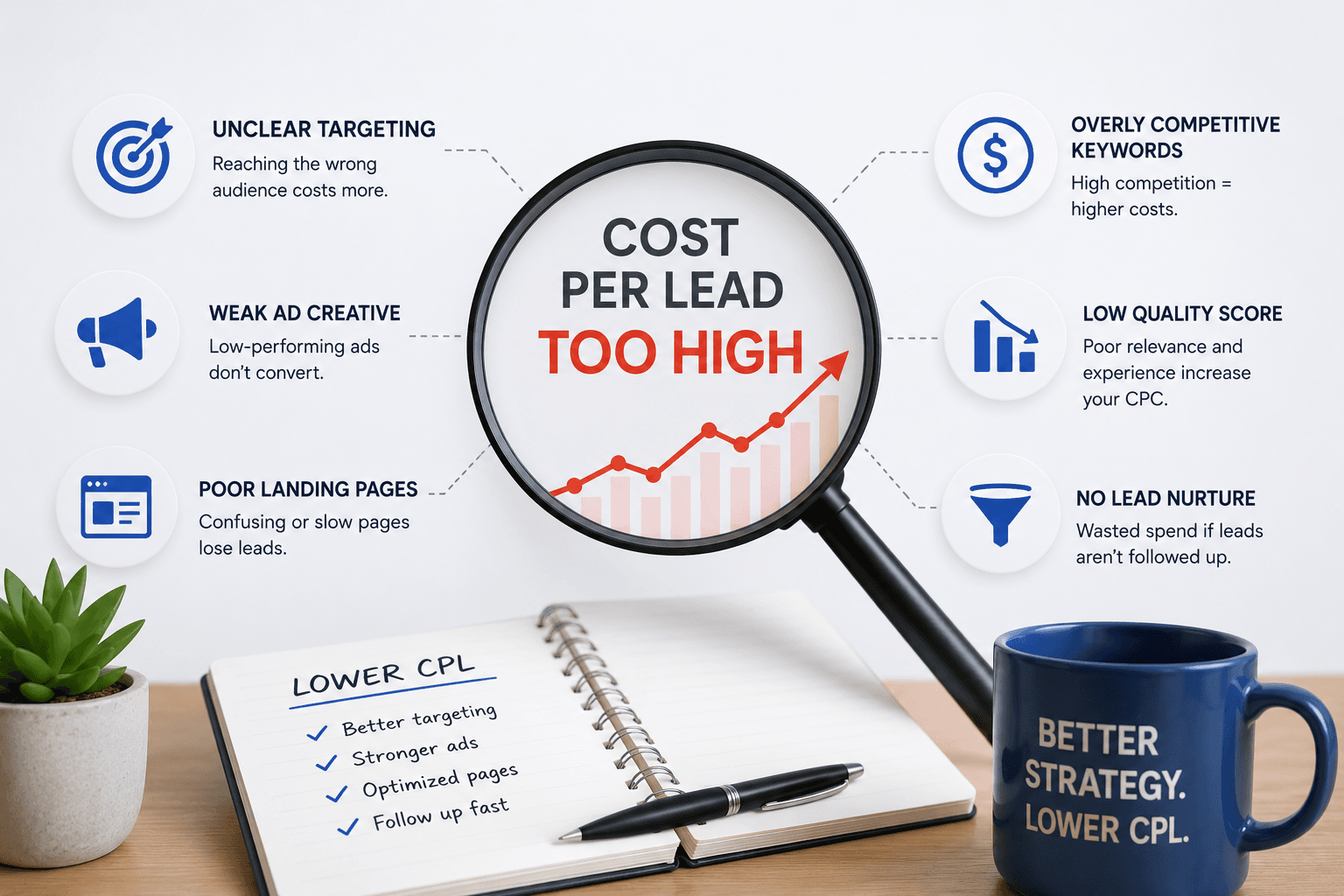
High cost per lead is usually not just an ad problem. It is a targeting, offer, landing page, tracking, and follow-up problem showing up inside one number.
Before you raise the budget or fire the channel, diagnose the full path from impression to booked appointment.
Key Takeaways
- CPL rises when targeting is too broad, offers are weak, landing pages are vague, or follow-up is slow.
- The cheapest lead is not always the most profitable lead.
- Fixing conversion rate often lowers CPL faster than changing bids.
1. Tighten Targeting
Broad targeting burns money on people who are unlikely to buy. Narrow by service area, service type, intent, and negative keywords before assuming the platform is the problem.
For local services, exclude areas you do not serve and queries that signal research rather than buying intent.
2. Improve the Offer
A weak call to action makes every click more expensive. Clear offers like free inspections, same-day estimates, emergency availability, or financing options can lift conversion rate quickly.
The offer should match the urgency of the search.
3. Fix the Landing Page
If your landing page is slow, generic, or hard to act on, paid traffic will punish you. The page should repeat the search intent, show proof, answer objections, and make contact effortless.
Put the phone number, form, trust signals, and service-area proof above the fold.
4. Speed Up Follow-Up
A cheaper lead that receives no response is still wasted spend. Instant text-back, CRM routing, and missed-call recovery can turn existing spend into more booked jobs.
Before increasing ad budget, make sure every current lead is being worked properly.
Want lower acquisition costs?
We'll audit your funnel from click to close and show where money is leaking.